


What Is Bacteriostatic Sodium Chloride?
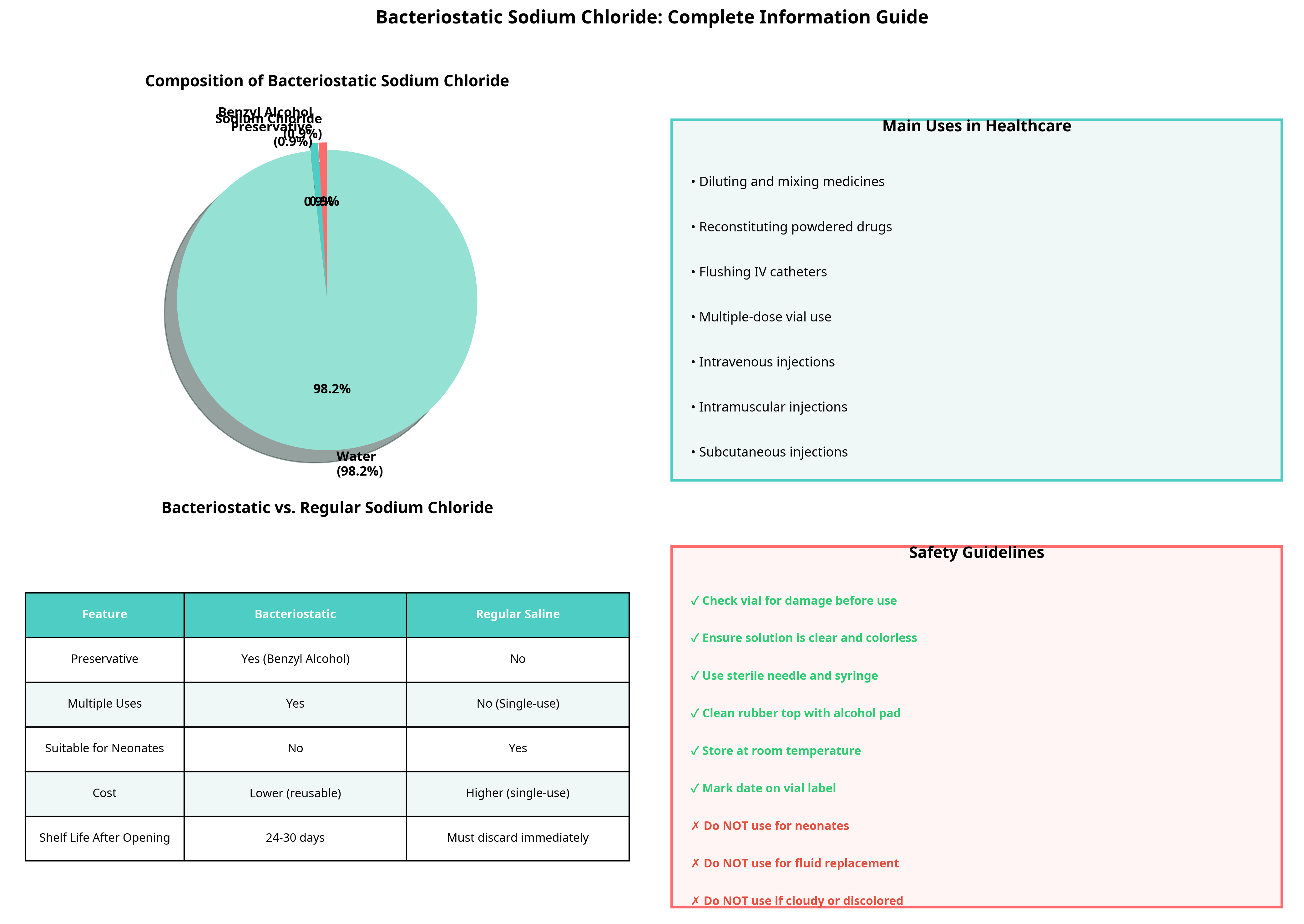
Bacteriostatic sodium chloride is a clear liquid solution used in hospitals and medical clinics. It is a special type of salt water with an extra ingredient to keep it clean and safe. The solution contains salt mixed with water and has a preservative, usually benzyl alcohol, which stops bacteria from growing. This is why it is called "bacteriostatic."
The solution has a concentration of 0.9%, meaning 0.9 grams of salt per 100 milliliters of liquid. This exact amount is important because it matches the natural salt balance in our blood and body fluids. Medical professionals know this solution will not harm the body or cause problems with the body's natural balance.
How Does It Work?
The human body is about 70% water. Our blood contains specific amounts of salt and minerals called electrolytes. Sodium and chloride are two important electrolytes that control water movement in cells, keep our heart beating regularly, and help nerves send messages.
When doctors give medicines through injections, they often mix those medicines with a liquid first. This liquid must be safe and not change the salt and water balance in the patient's body. Bacteriostatic sodium chloride is perfect because it has the same salt concentration as our blood.
The preservative in the solution prevents bacteria from multiplying. Bacteria are tiny living things that cause infections. In hospitals, keeping solutions free from bacteria is crucial for patient safety. The preservative stops bacteria from growing and reproducing rather than killing them, which is why it is called "bacteriostatic."
Main Uses in Healthcare
Diluting and Mixing Medicines
The most common use of bacteriostatic sodium chloride is to dilute medicines before injection. Many medicines come as powder and need to be mixed with liquid before use. Doctors and nurses use bacteriostatic sodium chloride to mix powdered medicines into injectable liquid. This process is called reconstitution.
For example, an antibiotic injection might come as dry powder in a vial. A nurse adds bacteriostatic sodium chloride to create a liquid medicine that can be injected into the patient's vein, muscle, or under the skin. The solution ensures the medicine is properly diluted and safe.
Multiple-Dose Vials
Bacteriostatic sodium chloride can be used multiple times from the same bottle, unlike regular sodium chloride which is single-use. The preservative keeps bacteria from growing, allowing nurses to draw medicine from the same vial multiple times without contamination concerns. This is helpful in busy hospitals where many patients need the same medicine.
Flushing Medical Devices
Healthcare workers use bacteriostatic sodium chloride to flush IV catheters. After giving medicine through an IV, nurses flush the tube to keep it clean and prevent blood clots.
Key Differences from Regular Sodium Chloride
Bacteriostatic sodium chloride differs from regular sodium chloride injection. Regular sodium chloride is preservative-free and comes in single-use vials. Once opened, it must be used immediately and discarded. Bacteriostatic sodium chloride has preservative allowing multiple uses.
However, this preservative is not suitable for all patients. Premature or very young infants cannot receive medicines mixed with bacteriostatic sodium chloride because the benzyl alcohol preservative can be harmful. For these patients, doctors must use preservative-free regular sodium chloride.
Benefits of Using Bacteriostatic Sodium Chloride
Safety and Sterility
The biggest benefit is that it keeps medicines safe and free from contamination. The preservative prevents bacteria from growing, protecting patients from dangerous infections.
Cost Effectiveness
Because it can be used multiple times from one vial, it reduces waste and lowers costs in hospitals and clinics. This is important in busy medical settings.
Convenience
Healthcare workers can keep a vial open and use it throughout a shift without contamination concerns. This saves time and improves hospital workflow.
Compatibility
Bacteriostatic sodium chloride works well with many different medicines, making it a reliable choice for mixing various drugs.

Important Safety Information
Bacteriostatic sodium chloride is useful but requires important safety rules. First, it should never be used for newborn babies or very young infants because the preservative can be harmful. Second, it should only be used for mixing medicines before injection, not for replacing fluids in dehydrated patients.
Healthcare workers must follow strict cleanliness rules. Even though the preservative stops bacteria from growing, the solution can still become contaminated if not handled properly. Nurses and doctors must use sterile techniques when drawing medicine and inspect the solution to ensure it is clear and clean before use.
Quality Standards
Products like those provided by Bacteriostatic Water USA meet strict quality standards set by government agencies and medical organizations. These standards ensure that every vial of bacteriostatic sodium chloride is sterile, has the correct concentration of salt, and contains the right amount of preservative. Healthcare facilities depend on these quality standards to keep their patients safe.
How to Use Bacteriostatic Sodium Chloride Properly
Healthcare workers must follow specific steps when using bacteriostatic sodium chloride. First, they should always check the vial to make sure it is not damaged and the seal is intact. The solution should be clear and colorless. If it looks cloudy or has particles floating in it, the vial should not be used.
When drawing the solution, healthcare workers must use a sterile needle and syringe. They should clean the rubber top of the vial with an alcohol pad before inserting the needle. The vial should be stored at room temperature in a cool, dry place away from direct sunlight.
Each time the vial is used, the date should be marked on the label. Most hospitals have policies about how long a vial can be used after opening, usually between 24 hours and 30 days.
Conclusion
Bacteriostatic sodium chloride is an essential tool in modern medicine. It is a simple solution made of salt and water with a preservative added, but it plays a huge role in keeping patients safe during medical treatment. By understanding what it is, how it works, and when it should be used, healthcare workers can use it properly to help patients get the medicines they need.
Whether it is mixing a powdered antibiotic, flushing an IV line, or preparing multiple doses of medicine from one vial, bacteriostatic sodium chloride helps make healthcare safer and more efficient. The solution's ability to prevent bacterial growth while maintaining the body's natural salt balance makes it invaluable in hospitals and clinics worldwide.
As long as healthcare workers follow the proper safety guidelines and use it only in appropriate situations, bacteriostatic sodium chloride will continue to be a trusted and valuable part of patient care. Understanding its proper use helps ensure that patients receive safe, effective medical treatment every day.

 Arabic
 French
 Spanish
 Portuguese
 Deutsch
 Turkish
 Dutch
Dutch
 Italiano
 Russian
 Romaian
 Portuguese (Brazil)
 Greek
Greek