


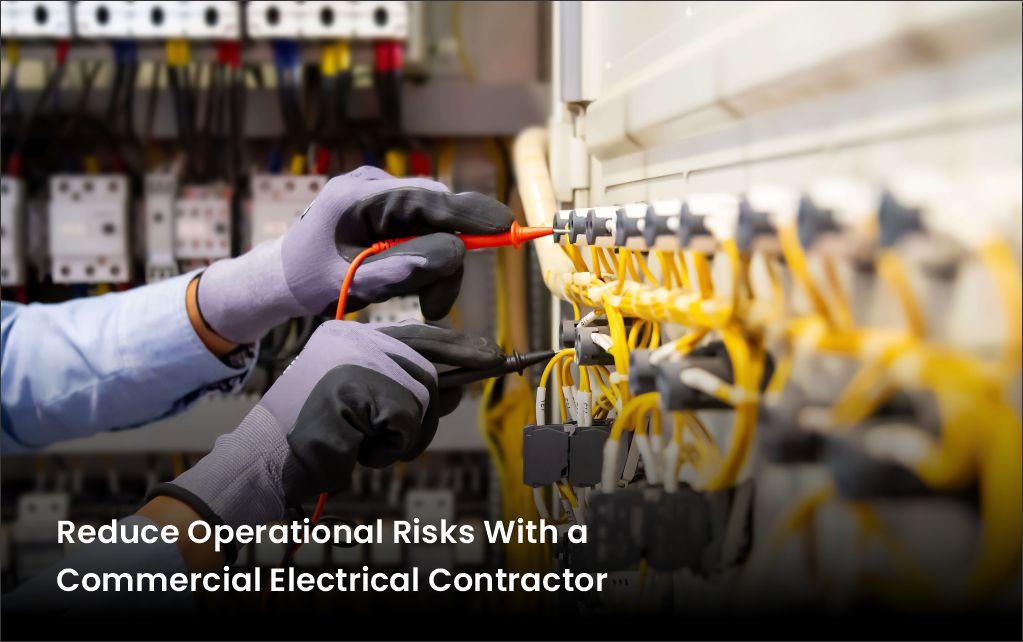
Electrical systems sit at the core of modern business operations. From manufacturing plants and logistics hubs to office complexes and retail environments, reliable power and safe infrastructure are essential for productivity, compliance, and employee wellbeing. Yet electrical faults, outdated installations, and poorly managed upgrades continue to cause avoidable downtime and safety incidents across industries.
For organizations seeking to minimize disruption and maintain operational continuity, partnering with a qualified commercial electrical contractor is one of the most effective risk-management decisions available. With specialist knowledge, regulatory awareness, and structured maintenance practices, contractors play a critical role in protecting facilities, assets, and people.
Understanding Operational Risk in Commercial Electrical Systems
Operational risk in electrical infrastructure typically arises from three areas: system failure, non-compliance, and human error. In commercial and industrial settings, even minor electrical issues can escalate quickly due to higher loads, complex distribution networks, and continuous usage patterns.
Common risk sources include:
-
Aging wiring and distribution boards
-
Inadequate load capacity for modern equipment
-
Improper installations or undocumented modifications
-
Deferred maintenance due to cost pressures
-
Insufficient testing and inspection regimes
When such issues go unmanaged, consequences range from equipment damage and production delays to safety hazards and legal liability. This is why organizations increasingly rely on a certified electrical contractor to provide structured oversight rather than reactive repairs.
Why a Commercial Electrical Contractor Reduces Risk
A professional commercial electrical contractor brings a systematic approach to electrical infrastructure management. Unlike ad-hoc maintenance providers, contractors operate with defined processes for inspection, documentation, compliance, and lifecycle planning.
1. Proactive Risk Identification
Experienced contractors assess entire systems rather than isolated faults. They evaluate load distribution, protection devices, earthing arrangements, and environmental factors such as heat or moisture exposure. This holistic view helps identify latent risks before failure occurs.
For example, during a routine inspection in a distribution warehouse, a contractor may detect overheating at a panelboard caused by incremental load increases over years. Early intervention prevents unplanned shutdown and fire risk.
2. Compliance With Safety and Regulatory Standards
Commercial facilities must meet strict electrical safety regulations and insurance requirements. A certified commercial electrical contractor ensures installations align with current standards, testing intervals are met, and documentation remains up to date.
Compliance failures often stem from outdated modifications or undocumented additions. Contractors maintain records, test certificates, and inspection reports that support audits and liability protection.
3. Structured Preventive Maintenance
Preventive maintenance programs are central to risk reduction. Contractors schedule testing, thermal imaging, protective device checks, and component replacement based on usage patterns and manufacturer guidance.
This approach contrasts with reactive repair models, where faults are addressed only after disruption occurs. Preventive strategies significantly reduce emergency incidents and extend asset life.
The Value of Sector-Specific Expertise
Electrical requirements vary widely across commercial, industrial, and residential environments. A contractor experienced across sectors understands how operational risks differ and how mitigation strategies must adapt.
-
A commercial electrical contractor focuses on offices, retail, healthcare, and public buildings with complex distribution and occupancy safety requirements.
-
An industrial electrical contractor manages heavy-load systems, machinery integration, and hazardous environments.
-
A domestic electrical contractor or residential electrical contractor deals primarily with housing infrastructure and lower-load systems.
Organizations benefit most when engaging specialists whose expertise matches their operational profile. Industrial facilities, for instance, require knowledge of motor control, automation interfaces, and high-capacity distribution capabilities beyond typical residential work.
Reducing Downtime Through Planned Electrical Upgrades
Electrical systems often evolve gradually as businesses expand. Additional equipment, IT infrastructure, or production machinery increases demand on circuits originally designed for lower loads. Without coordinated upgrades, this incremental growth creates hidden risk.
A qualified electrical contractor evaluates capacity against current and projected demand. They design staged upgrade plans that maintain continuity while improving resilience.
Typical risk-reduction upgrades include:
-
Distribution board modernization
-
Load balancing across phases
-
Cable capacity enhancement
-
Surge protection installation
-
Backup power integration
Planned upgrades reduce the likelihood of overload failures and enable facilities to scale safely. They also allow work to occur during scheduled downtime rather than emergency shutdowns.
Safety Culture and Workforce Protection
Electrical incidents in workplaces often involve arc faults, exposed conductors, or inadequate isolation procedures. Beyond equipment damage, these events pose direct risk to personnel.
A certified electrical contractor contributes to safety culture by:
-
Implementing safe isolation and lockout procedures
-
Ensuring protective devices function correctly
-
Verifying earthing and bonding integrity
-
Identifying hazardous installation conditions
-
Advising on safe equipment placement and access
Such measures align infrastructure with occupational safety practices, reducing accident probability and regulatory exposure.
Documentation and Traceability: A Hidden Risk Shield
One frequently overlooked risk factor is poor documentation. Facilities often accumulate undocumented changes over years, relocated circuits, added panels, and temporary connections made permanent. During faults or inspections, missing information complicates diagnosis and compliance verification.
Professional contractors maintain accurate schematics, test records, and modification logs. This documentation provides traceability, enabling faster troubleshooting and demonstrating due diligence to insurers and regulators.
In operational risk terms, accurate documentation shortens downtime and strengthens legal defensibility following incidents.
Energy Efficiency as Risk Mitigation
While often viewed separately, energy efficiency improvements also reduce operational risk. Overloaded circuits, overheating components, and voltage instability frequently result from inefficient or outdated equipment.
A best electrical contractor evaluates energy performance alongside safety. Upgrades such as LED lighting conversion, power factor correction, and efficient distribution layouts reduce electrical stress on systems. Lower load stress translates directly into improved reliability and reduced failure probability.
Efficiency measures therefore serve both sustainability and risk-management objectives.
Choosing the Right Contractor for Risk Reduction
Not all contractors deliver the same level of risk oversight. Organizations seeking meaningful operational resilience should evaluate providers against several criteria.
Certification and Competence
A certified electrical contractor demonstrates adherence to recognized standards and ongoing technical competence. Certification ensures familiarity with evolving regulations and best practices.
Commercial and Industrial Experience
Facilities should prioritize contractors with relevant sector experience. A contractor accustomed only to domestic environments may lack the systems perspective required in complex facilities.
Preventive Maintenance Capability
Risk reduction depends on structured maintenance, not just installation. Contractors should offer inspection schedules, testing regimes, and asset lifecycle planning.
Transparent Cost Structures
An affordable electrical contractor does not necessarily mean the lowest upfront price. True affordability reflects lifecycle value, reduced failures, longer asset life, and fewer emergency interventions.
Safety Record and Procedures
Documented safety processes, incident history, and risk assessments indicate professional maturity and reliability.
Selecting the right partner transforms electrical maintenance from reactive expense to strategic risk management.
Practical Example: Warehouse Distribution Upgrade
Consider a logistics warehouse experiencing intermittent circuit trips during peak operations. Temporary fixes had been applied over several years, including additional breakers and cable extensions.
A commercial electrical assessment revealed load imbalance across phases and undersized distribution boards relative to equipment growth. The contractor implemented phased upgrades, redistributed loads, and installed thermal monitoring.
Results included:
-
Elimination of nuisance tripping
-
Reduced overheating risk
-
Improved energy efficiency
-
Capacity for future expansion
This example illustrates how systematic intervention by a certified commercial electrical contractor converts recurring faults into long-term stability.
Practical Example: Office Building Preventive Program
In a multi-tenant office facility, electrical maintenance had been reactive for years. Minor faults were repaired individually without system review. A new maintenance contract introduced scheduled inspections, testing of protection devices, and documentation updates.
Within the first year, the contractor identified deteriorating insulation in legacy circuits and replaced aging panels before failure occurred. No electrical downtime incidents were recorded during the period, a significant operational improvement.
Such outcomes demonstrate the preventive value delivered by an experienced electrical contractor.
Integrating Electrical Risk Management Into Operations
Electrical infrastructure should be treated as a managed operational asset rather than background utility. Organizations that integrate contractor expertise into facility management processes achieve measurable risk reduction.
Key integration practices include:
-
Annual electrical risk assessments
-
Preventive maintenance contracts
-
Upgrade planning aligned with business growth
-
Incident review and corrective action processes
-
Documentation audits
A best electrical contractor supports these processes with technical insight and structured reporting, enabling informed decision-making at management level.
Balancing Cost and Reliability
Budget constraints often lead organizations to defer electrical upgrades or select the lowest-cost provider. However, electrical failures typically carry far higher indirect costs, lost productivity, safety incidents, reputational impact, and regulatory penalties.
An affordable electrical contractor delivers value through reliability rather than minimal pricing. Lifecycle costing shows that preventive maintenance and planned upgrades reduce total expenditure by avoiding emergency repairs and asset replacement.
Risk-aware organizations therefore evaluate electrical services based on long-term operational impact rather than short-term cost alone.
The Broader Role of Electrical Contractors Across Sectors
Although commercial facilities face unique challenges, collaboration across contractor specializations strengthens overall electrical safety standards. Knowledge exchange between commercial, industrial, and residential sectors drives innovation in protection devices, installation methods, and monitoring technologies.
An experienced industrial electrical contractor may introduce advanced condition-monitoring practices later adopted in commercial settings. Conversely, safety procedures refined in commercial environments influence residential installation standards.
This cross-sector evolution underscores the importance of engaging contractors with broad technical awareness and ongoing professional development.
Conclusion: Electrical Expertise as Operational Assurance
Electrical infrastructure reliability directly influences business continuity, safety, and compliance. Failures rarely occur without warning; they typically emerge from accumulated stress, deferred maintenance, or undocumented change.
Partnering with a qualified commercial electrical contractor transforms electrical systems from potential vulnerability into managed assets. Through proactive inspection, preventive maintenance, regulatory alignment, and structured upgrades, contractors reduce operational risk at its source.
Organizations that prioritize certified expertise, sector-specific knowledge, and lifecycle planning gain more than technical support; they gain operational assurance. In an environment where downtime and safety incidents carry increasing consequences, professional electrical management is not merely a maintenance choice but a strategic safeguard.

 English
 Arabic
 French
 Spanish
 Portuguese
 Deutsch
 Turkish
 Dutch
Dutch
 Russian
 Romaian
 Portuguese (Brazil)
 Greek
Greek