


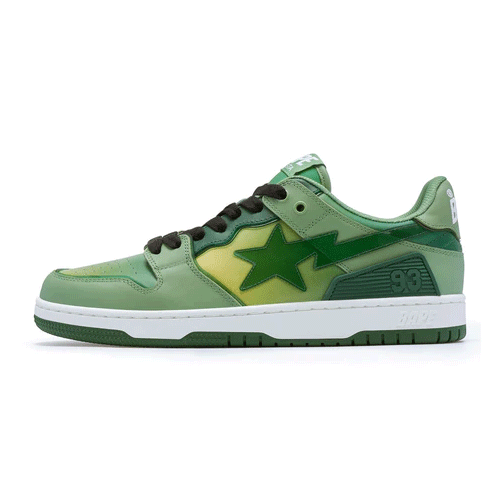
In the ever-evolving world of sneakers, few silhouettes have managed to stir conversation, command attention, and maintain cult status quite like the Bapesta. Bold, flashy, and unmistakably loud, the Bapesta isn't just a shoe—it's a symbol of streetwear history, an artifact of early 2000s hype culture, and a reflection of the global influence of Japanese fashion.
Whether you're a lifelong sneakerhead or just diving into the world of urban fashion, understanding the legacy of the Bapesta is essential. It's more than a sneaker; it's a cultural statement that continues to influence fashion, music, and design around the world.
The Origins of Bapesta: A Fusion of Culture and Creativity
The story of the Bapesta begins with A Bathing Ape (BAPE), the Tokyo-based streetwear label founded by Nigo in 1993. Known for its wild graphics, camouflage prints, and limited-edition drops, BAPE quickly became a cult favorite in Japan and among hip-hop artists in the West.
In 2002, BAPE introduced the Bapesta—a sneaker that drew immediate attention for its striking resemblance to the Nike Air Force 1. But while the silhouette was similar, the execution was anything but ordinary. Patent leather uppers in candy-like colors, bold star logos in place of the Swoosh, and the unmistakable “Bapesta” branding on the heel set it apart from anything else on the market.
At the time, copying a classic sneaker and turning it into a brand-defining product was almost unheard of. But Nigo's vision wasn't about imitation—it was about reinvention. He took a globally recognized sneaker and filtered it through the lens of Japanese pop culture, streetwear, and his own obsessive love for hip-hop.
Early Hype and Celebrity Endorsement
The early 2000s marked a golden era for the Bapesta, and much of its success came from its association with hip-hop culture. Rappers like Pharrell Williams, Kanye West, and Lil Wayne were early adopters, often spotted wearing custom Bapestas or featuring them in music videos. These appearances helped catapult the sneaker from a niche Japanese release to a global must-have item.
Pharrell, in particular, played a pivotal role in bringing BAPE to a wider audience. His friendship with Nigo led to collaborations that extended beyond sneakers and into fashion lines like Billionaire Boys Club and Ice Cream, both of which carried the same design DNA seen in the Bapesta—vibrant, playful, and dripping with personality.
This celebrity backing helped solidify the Bapesta's place in the streetwear canon. It wasn't just a fashion choice; it was a statement that you understood the culture, appreciated its nuances, and weren't afraid to stand out.
Design Aesthetics: Loud, Proud, and Unapologetically Flashy
One of the defining features of the Bapesta is its unapologetically bold design. Where other sneakers leaned into minimalism, the Bapesta went the opposite direction. Neon pinks, chrome finishes, and wild prints were standard. Every pair felt like a collectible—limited, expressive, and impossible to ignore.
The signature star logo, known as the "sta," replaced the Nike Swoosh but with a comic-book twist. The use of patent leather gave the shoe a glossy, almost toy-like appearance, which aligned perfectly with the playful identity of BAPE's other products.
Even the soles mimicked the Air Force 1, down to the tread pattern. But the branding and the presentation made it clear: this was something entirely new, even if it paid homage to something familiar.
The Controversy: Homage or Imitation?
As the Bapesta rose in popularity, so did criticism around its design origins. Many sneaker enthusiasts and critics questioned whether the silhouette's similarity to the Air Force 1 crossed the line from inspiration to imitation.
But the controversy didn't hurt the Bapesta—it amplified its mystique. In streetwear, where rebellion and counterculture are core values, going against the grain can be a powerful move. Nigo's refusal to shy away from bold design decisions only made the sneaker more appealing to those looking for something outside the mainstream.
In fact, the tension between homage and originality became part of the Bapesta's appeal. It forced people to ask questions about what authenticity means in fashion, and whether reinvention can be a form of creativity in itself.
Evolution and Rebirth: Bapesta in the Modern Era
After its initial boom in the early 2000s, the Bapesta experienced a period of decline. Fashion trends shifted, and the market became saturated with new silhouettes and sneaker collaborations. But like any true icon, the Bapesta never fully disappeared—it simply waited for the right moment to return.
In recent years, the sneaker has enjoyed a resurgence. New drops, collaborations, and a general nostalgia for Y2K fashion have brought the Bapesta back into the limelight. Updated versions of the silhouette have been released, often in premium materials and exclusive colorways that nod to the original designs while embracing modern sneaker standards.
Collaborations with brands like Coach, Marvel, and even Adidas have introduced the Bapesta to new audiences, proving that its appeal isn't limited to one generation.
Why the Bapesta Still Matters
In a market filled with endless sneaker drops and hyped collaborations, the Bapesta still stands out. It represents a unique intersection of fashion, music, and art. It reminds us of a time when streetwear was still a subculture, when fashion was driven by tastemakers rather than algorithms, and when owning a rare sneaker felt like discovering a secret.
For today's fashion-savvy consumer, the Bapesta offers a link to that golden era. It's not just a throwback—it's a testament to how bold design and cultural relevance can turn a shoe into a legacy.
Styling the Bapesta: Making a Statement
Wearing a pair of Bapestas is never a quiet decision. The sneaker demands attention, and styling it requires a certain confidence. But that's part of the fun. Whether paired with baggy denim and a vintage tee or integrated into a high-fashion ensemble, the Bapesta adds an edge that no other sneaker can replicate.
It's a piece that speaks to your personality—loud, creative, and unafraid to challenge the status quo. For sneakerheads who view fashion as a form of self-expression, the Bapesta is a canvas for individuality.
The Future of Bapesta: Legacy and Longevity
As trends continue to shift, the Bapesta's place in fashion history is secure. It laid the groundwork for the designer sneaker era, influenced countless other brands, and helped bridge the gap between Eastern and Western streetwear.
Its continued relevance speaks volumes about its cultural significance. As long as there are creatives willing to push boundaries, the Bapesta will always have a place in the conversation.
Conclusion
The Bapesta isn't just a sneaker—it's a story. One of vision, rebellion, and global influence. From Tokyo streets to American music videos, it carved out a space in the crowded sneaker world by being unapologetically bold. For those who truly understand the culture, owning a pair is more than a fashion choice—it's a rite of passage.

 Arabic
 French
 Spanish
 Portuguese
 Deutsch
 Turkish
 Dutch
Dutch
 Italiano
 Russian
 Romaian
 Portuguese (Brazil)
 Greek
Greek