


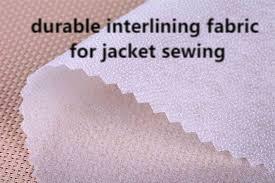
In contemporary apparel production, the invisible layer known as Interlining plays a decisive role in determining how garments hold their shape and withstand daily wear; designers and technicians rely on it to balance aesthetics with function. Applied correctly, this internal support transforms delicate fabrics into structured pieces that look polished on the rack and wear well over time.
Structural Benefits for Tailoring
A well chosen support layer gives collars, lapels, and waistbands the body they need to appear crisp and tailored. Without that internal reinforcement, even high-quality outer fabrics can look limp or lose definition after washing. For bespoke tailoring and ready-to-wear alike, internal supports help preserve the designer’s intended silhouette and deliver consistent results across production runs.
Comfort and Movement Considerations
Support materials must complement the garment’s intended movement. Lightweight options provide subtle shaping without restricting stretch, making them ideal for knitwear or active garments. Conversely, heavier internal layers can be used in outerwear or formal suits where a firmer hand is desirable. Selecting the right balance ensures comfort while maintaining the visual integrity of the piece.
Production Techniques and Application Methods
There are several ways to integrate support layers during manufacturing, including heat-activated bonding, sewn-in panels, and adhesive lamination. Each method has trade-offs in terms of speed, cost, and the final feel of the garment. High-volume factories often favor fusible solutions for efficiency, while ateliers and luxury brands may choose sewn or stitched approaches to preserve fabric hand and allow for precision finishing.
Material Choices and Performance Metrics
Support fabrics come in woven, non-woven, and knitted constructions, each with distinct mechanical properties. Factors such as weight, recovery, and breathability influence performance. Testing for shrinkage, bond durability, and wash-fastness helps ensure that the support layer will behave compatibly with the outer fabric across the garment lifecycle. Quality control at this stage prevents distortions and returns in retail.
Sustainability and End-of-Life Thinking
As circularity becomes a priority, manufacturers are rethinking internal components to support recycling and reduce environmental impact. Recyclable fibers, water-based adhesives, and separable constructions enable easier disassembly and material recovery. Designing with lifecycle thinking means choosing supports that extend garment life while also allowing responsible disposal or reclamation at end-of-life.
Design Opportunities Enabled by Internal Supports
Beyond utility, internal layers enable creative effects: dramatic collars that hold sculpted forms, blouses with controlled volume, or performance wear with zoned stability where needed. Gradated stiffness across a pattern can produce garments that combine movement and structure elegantly, giving designers another tool to shape silhouette without altering outer fabric choices.
Quality Assurance and Testing Protocols
Robust QA routines validate bond strength, dimensional stability, and seam integrity after repeated laundering. Routine sampling and accelerated wear tests reveal how the entire garment responds to stress, ensuring that reinforcement choices meet both aesthetic and practical requirements. Clear specification sheets and supplier communication prevent mismatches that could compromise finished products.
Practical Guidance for Makers and Brands
When choosing a support layer, consider the garment’s end use, laundering expectations, and the wearer’s needs. Prototype early and test across realistic wear scenarios. Collaborating closely with material suppliers provides insights into compatibility and emerging sustainable options. Small adjustments in pattern cutting and placement of internal supports can yield significant improvements in fit and longevity.
Thoughtful internal reinforcement elevates garment quality by combining structure with comfort and sustainability. When selection, testing, and application are aligned, clothing not only looks better but endures longer, delivering value to both makers and wearers. For more technical guidance and industry resources, visit https://www.interlining-factory.com/news/what-is-interlining-types-applications-and-more.html

 Arabic
 French
 Spanish
 Portuguese
 Deutsch
 Turkish
 Dutch
Dutch
 Italiano
 Russian
 Romaian
 Portuguese (Brazil)
 Greek
Greek