


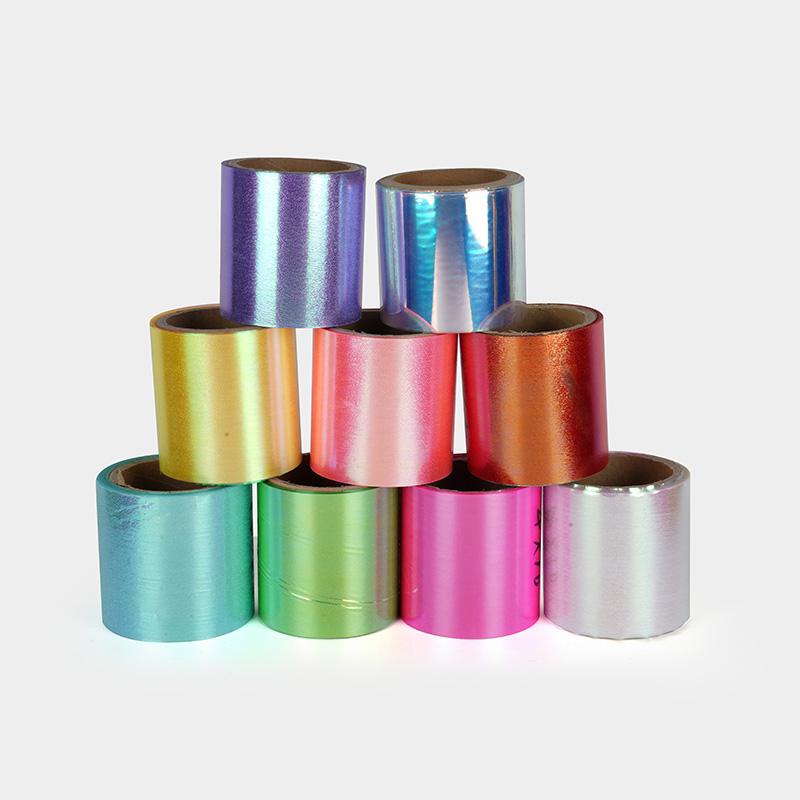
Metallized PET film is a versatile material created by depositing a thin layer of metal, typically aluminum, onto a polyester (PET) substrate. This process results in a composite material that combines the inherent benefits of polyester with the functional characteristics of metal. The PET base provides mechanical strength, dimensional stability, and a good barrier against moisture and gases. The metallic layer, which is extremely thin, adds new properties, making metallized PET film valuable for applications requiring a barrier, reflectivity, or a conductive surface.
The production of metallized PET film typically involves a vacuum metallization process. In a vacuum chamber, a roll of clear PET film is unwound and passed over a cooling drum. Aluminum wire is heated in a crucible until it vaporizes. This aluminum vapor then condenses onto the cool surface of the PET film, forming a uniform metallic coating. The thickness of this metal layer on the metallized PET film can be precisely controlled, affecting its final properties, such as its light transmission and electrical conductivity. After metallization, the film is often coated with a protective layer to prevent the delicate metal surface from being scratched or oxidized.
One of the primary functions of metallized PET film is to provide a barrier. The metal layer significantly reduces the transmission of oxygen, water vapor, and light. This makes metallized PET film a suitable material for flexible packaging, helping to extend the shelf life of food products, pharmaceuticals, and other sensitive goods. Compared to full metal foils, metallized PET film offers a more flexible and lightweight barrier solution. It is also more cost-effective, as it uses a minimal amount of metal to achieve a substantial barrier effect.
Beyond packaging, the reflective properties of metallized PET film are utilized in various industries. It is used in decorative applications like gift wraps and balloons for its shiny, metallic appearance. In technical fields, metallized PET film serves as a reflector in lighting fixtures and solar energy collectors. Its ability to conduct electricity also allows metallized PET film to be used in flexible circuits and as a component in capacitors. The combination of flexibility, durability, and functional performance makes metallized PET film a material with a wide range of uses across different sectors.

 Arabic
 French
 Spanish
 Portuguese
 Deutsch
 Turkish
 Dutch
Dutch
 Italiano
 Russian
 Romaian
 Portuguese (Brazil)
 Greek
Greek