



When we think of fabric, our minds usually drift to the clothes in our closet — cotton t-shirts, denim jeans, or silk scarves. But there is a massive, often invisible world of fabric that does much more than just look good. It builds our roads, filters our air, protects our firefighters, and even heals our wounds. This is the world of technical textiles, a sector where science meets structure, and function reigns supreme over fashion.
In this rapidly evolving landscape, brands like GNC Exports are stepping up to bridge the gap between raw innovation and practical application. But what exactly makes this industry the backbone of modern engineering? Let’s dive deep into the fibers that are silently running our world.
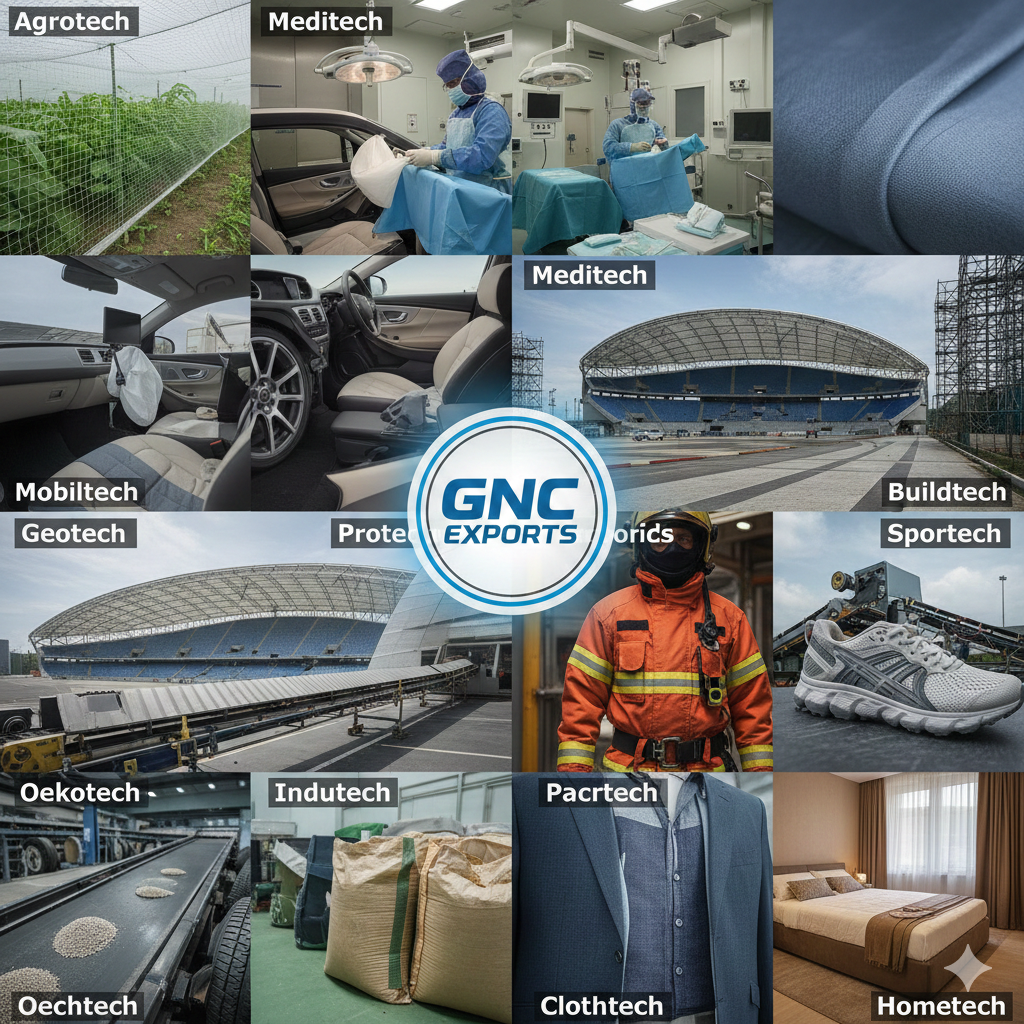
Technical Textiles: The Unsung Heroes of Industry
At its core, the definition is simple: Technical textiles are materials manufactured primarily for their technical performance and functional properties rather than their aesthetic or decorative characteristics. While a standard textile is judged by its drape or color, a technical textile is judged by its tensile strength, thermal resistance, or porosity.
The shift toward these high-performance fibers has been nothing short of a revolution. We are moving away from traditional natural fibers for industrial use and leaning heavily into advanced polymers and synthetic composites. This transition allows industries to solve complex problems — like soil erosion or bacterial infection — using engineered fabrics.
Why Function Matters More Than Form
The demand for functional fabrics is driven by necessity. In a world facing climate challenges and rapid urbanization, we need materials that last longer and perform better.
- Durability: Unlike fast fashion, these textiles are built to endure extreme conditions.
- Versatility: They can be engineered to be fire-retardant, waterproof, or breathable.
- Cost-Effectiveness: Although the initial investment might be higher, the lifecycle cost of using durable industrial fabrics is significantly lower.
The 12 Pillars of the Industry
To understand the scope of this market, we have to look at how it is categorized. The global standard divides technical textiles into 12 distinct sectors. Here is how they impact our daily lives, and why companies like GNC Exports are focusing on these critical areas.
1. Agrotech (Agro-textiles)
Agriculture is no longer just about seeds and soil; it’s about yield protection. Agro-textiles include shade nets, crop covers, and harvesting nets. These non-woven fabrics protect crops from harsh weather and pests, significantly increasing agricultural output.
2. Meditech (Medical Textiles)
Perhaps the most critical category for human health, medical textiles range from simple bandages to complex implantable materials like artificial arteries. The demand for hygiene and sterility has made antimicrobial fabrics a standard in hospitals globally.
3. Mobiltech (Automotive Textiles)
Next time you sit in your car, look around. The seatbelts, airbags, carpets, and even the tire cords are all examples of automotive textiles. These materials provide safety and comfort while reducing the overall weight of the vehicle for better fuel efficiency.
4. Geotech (Geotextiles)
Civil engineering relies heavily on geotextiles. These are permeable fabrics used in association with soil. They create a separation layer, provide filtration, and assist in drainage. If you see a road being built that doesn’t crack after the first rain, Geotech materials are likely at work underneath the asphalt.
5. Buildtech (Construction Textiles)
From scaffolding nets to architectural membranes used in stadium roofs, construction textiles offer strength and flexibility that concrete and steel sometimes cannot. They provide insulation and weatherproofing, essential for modern sustainable buildings.
6. Protech (Protective Clothing)
This sector saves lives. Protective clothing includes bulletproof vests, firefighter suits, and hazmat gear. Using high-tenacity yarns, these fabrics provide a shield against heat, chemicals, and ballistic impact.
7. Sportech (Sports Textiles)
Performance athletes need performance gear. Sportech involves moisture-wicking fabrics, breathable meshes, and lightweight composites used in running shoes and equipment.
8. Indutech (Industrial Textiles)
This covers a broad range of filtration products, conveyor belts, and abrasive pads. It is the machinery behind the machinery — the fabrics that keep factories running smoothly.
(The list continues with Oekotech for environment, Packtech for packaging, Clothtech for garment components, and Hometech for functional home furnishings).
The Role of GNC Exports in the Global Supply Chain
In an industry this complex, sourcing the right material is half the battle. This is where GNC Exports distinguishes itself. They aren’t just a supplier; they act as a vital link in the global textile supply chain.
Sourcing technical textiles requires a deep understanding of specifications. A slight variation in the GSM (grams per square meter) or coating of a fabric can render it useless for a specific application. GNC Exports has built a reputation for precision. Whether a client needs geo-membranes for a tunnel project or sterile fabrics for a medical facility, they ensure the material meets rigorous international safety standards.
By prioritizing quality control and leveraging a vast network of manufacturers, GNC Exports ensures that businesses don’t just get fabric — they get a solution. Their focus on consistency helps clients avoid the common pitfalls of material failure, which, in sectors like Protech or Meditech, is simply not an option.
Innovation and Sustainability: The Road Ahead
The future of technical textiles is inextricably linked to technology and the environment. We are no longer just making fabric; we are making “smart” materials.
The Rise of Smart Textiles
Imagine a shirt that tracks your heart rate or a bandage that changes color if a wound gets infected. Smart textiles integrate electronic components and conductive threads into the fabric weave. This fusion of textiles and technology (wearable tech) is the next frontier, and it relies heavily on the base properties of technical fabrics.
Sustainable Manufacturing
The textile industry has historically been a heavy polluter, but technical textiles are leading the charge in green innovation. There is a massive push toward recyclable fibers and biodegradable non-wovens.
For instance, Oekotech focuses specifically on environmental protection, using textiles for waste disposal and recycling systems. Companies are now looking at how to make high-performance materials without a high carbon footprint. GNC Exports is keenly aware of this shift, aligning with partners who prioritize eco-friendly production methods to meet the green mandates of European and American markets.
Why the Market is Booming
The growth of this industry is not accidental. It is driven by global trends that prioritize efficiency and safety.
- Infrastructure Growth: As developing nations build roads and bridges, the demand for Geotech and Buildtech skyrockets.
- Health Awareness: Post-pandemic, the world is hyper-aware of hygiene, driving sustained demand for Meditech products.
- Automotive Safety: Stricter safety regulations worldwide require more advanced Mobiltech components in every vehicle.
For businesses looking to enter or expand in this space, partnering with established names like GNC Exports provides a competitive edge. Navigating the matrix of polymer types, coating technologies, and weave patterns is difficult without an experienced hand guiding the procurement process.
Conclusion
We are living in the age of advanced materials. The cloth is no longer just a covering; it is a tool. From the agro-textiles boosting our food security to the protective clothing keeping our first responders safe, technical textiles are woven into the very fabric of modern society.
As the industry moves toward smart fabrics and sustainable solutions, the reliance on specialized, high-quality sourcing becomes more critical than ever. Brands like GNC Exports stand at the forefront of this evolution, ensuring that whether for a hospital, a highway, or a harvest, the right textile is always available to get the job done.
The future is functional. And it is being woven right now.

 Arabic
 French
 Spanish
 Portuguese
 Deutsch
 Turkish
 Dutch
Dutch
 Italiano
 Russian
 Romaian
 Portuguese (Brazil)
 Greek
Greek