



Let’s be honest for a second. Most people don’t wake up thinking, “Yeah, today I need to look into water fountains.” It’s not urgent. It’s not flashy. It’s not like buying a new phone or car.
But here’s the weird part — the moment you actually add one to your space, everything feels different.
Quieter. Softer. A little more… put together.
And no, that’s not some over-the-top design talk. It’s just what happens when moving water enters a space.
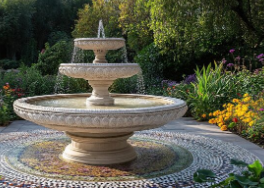
The Subtle Power of Water in a Space
There’s something about water that just works. Always has.
You walk into a place with one of those well-placed fountains, and even if you don’t notice it right away, your brain does. The gentle sound kind of cuts through noise without being annoying. It fills silence without making things feel crowded.
It’s not magic. It’s just human nature.
That’s probably why water fountains have been around forever — from ancient courtyards to modern patios. Different styles, same idea.
And yeah, they’re still relevant. Maybe even more now, considering how chaotic everything feels most days.
Not Just Decoration (Even Though They Look Good)
A lot of people assume fountains are just decorative pieces. Something you throw into a garden because it looks nice in photos.
That’s part of it. Sure.
But it’s not the whole story.
A well-placed fountain actually changes how a space feels. Indoors, it can soften harsh silence. Outdoors, it masks street noise or neighbors. It adds movement where everything else is static.
And honestly, that matters more than we admit.
Because most spaces today? They’re kind of lifeless.
Flat walls. Sharp corners. No flow.
Adding fountains is one of the easiest ways to fix that without tearing everything apart.
Indoor vs Outdoor: Different Vibes, Same Impact
People often get stuck deciding — indoor or outdoor?
Truth is, both work. Just in different ways.
Indoor water fountains are more personal. They sit in your living room, office, maybe even your bedroom. They’re quieter, smaller, and more about creating a calm pocket inside your day.
Outdoor fountains are a bit more expressive. They can be bold, central pieces. Or subtle accents tucked into a corner. Either way, they bring life to a space that might otherwise feel empty.
If you’ve got both? Even better.
But if not, start where you spend most of your time.
You Don’t Need a Huge Space (Seriously)
This is where people overthink things.
They imagine large gardens, big courtyards, luxury homes — the kind of places you see in magazines.
But that’s not reality for most people.
The good news? You don’t need all that.
There are water fountains made for small apartments, balconies, tight corners. Tabletop designs, wall-mounted options, compact floor units.
Some of them take up less space than a chair.
So yeah, space isn’t really an excuse anymore.
The Sound Factor — It’s Bigger Than You Think
Let’s talk about the sound for a second.
Because this is where fountains really win.
It’s not loud. It’s not distracting. But it’s there.
That steady trickle or soft cascade does something weirdly effective — it pulls you out of your head a bit. Gives your brain something simple to focus on.
In a world full of notifications, traffic noise, and constant chatter, that’s kind of rare.
Even a small fountain can make a noticeable difference.
And once you get used to it, silence without it feels… off.
Maintenance Isn’t as Bad as People Think
Another common hesitation — maintenance.
People assume it’s going to be a hassle. Constant cleaning, complicated setups, things breaking.
It’s not that dramatic.
Most modern fountains are pretty straightforward. Keep the water clean, maybe wipe it down now and then, check the pump occasionally.
That’s about it.
No, it’s not zero effort. But it’s far from difficult.
And compared to the effect it has? It’s honestly a small trade.
Style Matters — But Don’t Overcomplicate It
Here’s where things can get a little messy.
There are so many styles out there. Modern, rustic, stone, glass, minimalist, traditional… it’s a lot.
And people get stuck trying to pick the “perfect” one.
Don’t.
Just choose something that doesn’t feel out of place in your space.
If your home is clean and modern, go simple. If it’s more natural or cozy, something textured or earthy works better.
You don’t need to match everything perfectly. In fact, slightly mismatched can feel more real.
The goal isn’t perfection. It’s comfort.
Why People Are Coming Back to Fountains
For a while, fountains kind of faded out. They felt outdated. Something from older homes or luxury spaces.
But lately? They’re making a comeback.
And it makes sense.
People are tired of sterile environments. Tired of everything feeling digital, artificial, rushed.
There’s a growing need for things that feel… grounded.
And fountains do that without trying too hard.
They’re not trendy in a loud way. They’re just quietly effective.
Small Change, Big Shift
This is probably the most important point.
Adding a fountain isn’t a massive renovation. It’s not a huge commitment.
But it creates a noticeable shift.
The space feels more intentional. More complete.
You might not be able to explain exactly why. But you’ll feel it.
And so will anyone who walks in.
So, Is It Worth It?
Short answer? Yeah.
Longer answer… it depends on what you’re looking for.
If you want something flashy, something that grabs attention instantly, maybe a fountain isn’t your thing.
But if you want something that slowly improves how your space feels — something subtle, consistent, and honestly kind of underrated — then it’s absolutely worth considering.
Water fountains aren’t about showing off.
They’re about creating a better environment without making a big deal out of it.

Final Thoughts (And Where to Start)
If you’ve been thinking about it, even a little, it’s probably worth exploring.
Start small if you’re unsure. A compact indoor piece. Something simple.
FAQs
1. Are water fountains expensive to run?
Not really. Most use small pumps that don’t consume much electricity. It’s usually less than running common household appliances.
2. Do fountains attract insects outdoors?
If the water is moving properly, it actually helps prevent that. Stagnant water is the real problem, not fountains.
3. Can I use fountains in small apartments?
Yes, absolutely. There are plenty of compact designs made specifically for smaller spaces.
4. How often do I need to clean a fountain?
Depends on usage, but generally every couple of weeks is enough to keep it looking and working well.

 Arabic
 French
 Spanish
 Portuguese
 Deutsch
 Turkish
 Dutch
Dutch
 Italiano
 Russian
 Romaian
 Portuguese (Brazil)
 Greek
Greek