


In today’s competitive business environment, maintaining quality is not just an option it is a necessity. Organizations across industries are constantly striving to improve their processes, enhance customer satisfaction, and build credibility. One of the most recognized ways to achieve this is through ISO 9001 certification.
This globally accepted standard helps businesses streamline operations, reduce errors, and deliver consistent quality products and services. Whether you run a small enterprise or a large corporation, understanding ISO 9001 can significantly impact your growth and reputation.
What is ISO 9001 Certification?
ISO 9001 certification is an international standard for Quality Management Systems (QMS). It is developed by the International Organization for Standardization (ISO) and provides a structured framework that organizations can follow to ensure consistent quality in their operations.
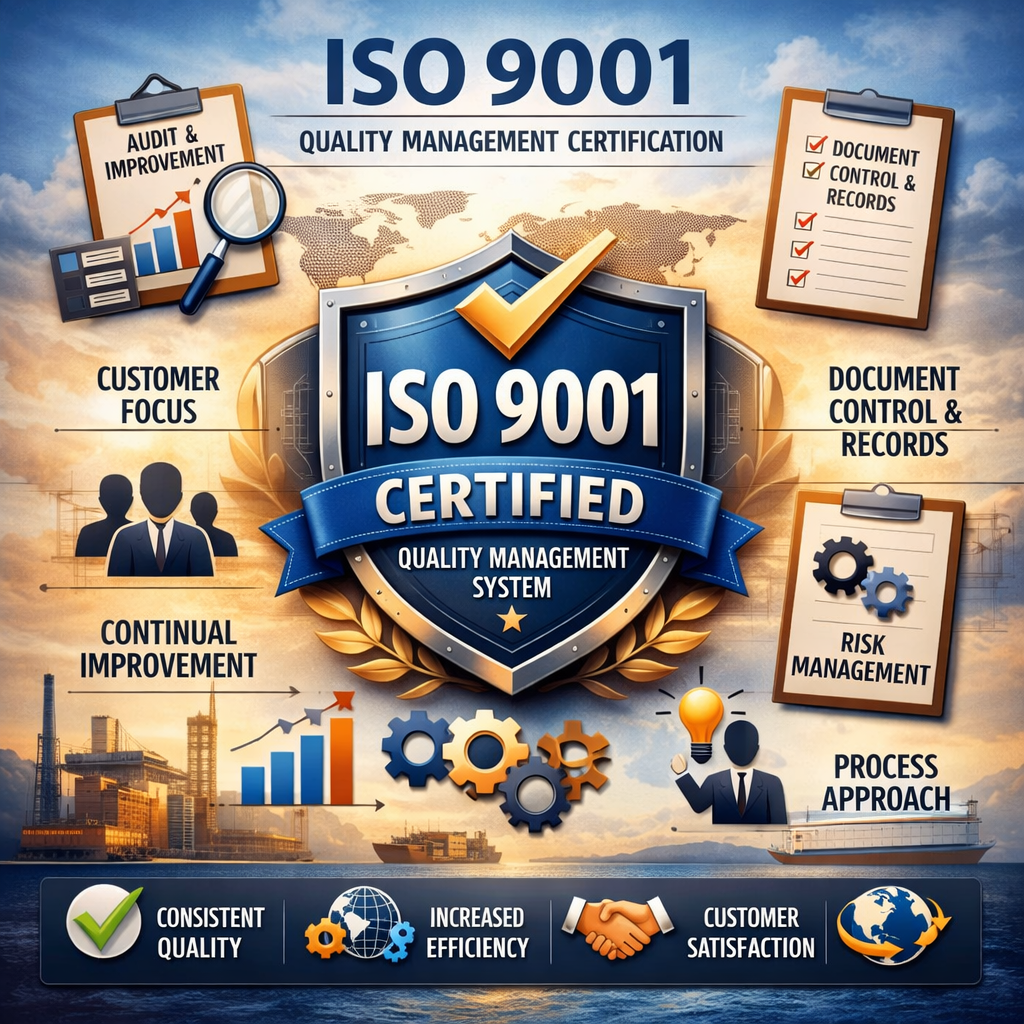
The certification focuses on several key principles, including:
- Customer focus
- Leadership involvement
- Process approach
- Continuous improvement
- Evidence-based decision making
By implementing these principles, businesses can create a strong foundation for delivering reliable products and services.
Why ISO 9001 Certification Matters
ISO 9001 certification is not just a certificate—it is a strategic tool that helps businesses improve their overall performance. Companies that adopt this standard often experience better efficiency and stronger customer relationships.
Here are some key reasons why ISO 9001 certification is important:
1. Enhances Customer Satisfaction
A structured QMS ensures that customer requirements are consistently met. This leads to improved trust and long-term relationships.
2. Improves Operational Efficiency
ISO 9001 helps identify inefficiencies in processes and eliminates unnecessary steps, saving both time and resources.
3. Builds Business Credibility
Certification acts as proof that your organization follows international quality standards, making it easier to gain customer confidence.
4. Supports Continuous Improvement
The framework encourages regular monitoring and evaluation, helping businesses continuously improve their performance.
Key Requirements of ISO 9001
To achieve ISO 9001 certification, organizations must meet certain requirements outlined in the standard. These include:
- Defining a clear quality policy
- Setting measurable objectives
- Documenting processes and procedures
- Conducting internal audits
- Implementing corrective actions
These requirements ensure that the organization maintains consistency and accountability across all operations.
ISO 9001 Certification Process
The certification process may seem complex, but it becomes manageable when approached step by step.
Step 1: Gap Analysis
Identify the differences between your current processes and ISO 9001 requirements.
Step 2: Documentation
Prepare quality manuals, policies, and procedures that align with the standard.
Step 3: Implementation
Apply the documented processes in your daily operations and train your team accordingly.
Step 4: Internal Audit
Conduct internal audits to evaluate the effectiveness of your system.
Step 5: Certification Audit
An external certification body audits your organization. If you meet all requirements, you receive ISO 9001 certification.
Benefits of ISO 9001 Certification
Organizations that implement ISO 9001 experience a wide range of benefits, including:
- Better process control
- Reduced operational risks
- Increased employee engagement
- Higher customer retention
- Improved market opportunities
Additionally, ISO 9001 certification can open doors to international markets, as many global clients prefer working with certified companies.
Who Should Get ISO 9001 Certified?
ISO 9001 certification is suitable for organizations of all sizes and industries. Whether you are in manufacturing, healthcare, IT, education, or services, this certification can add value to your business.
Small and medium enterprises (SMEs) especially benefit from ISO 9001, as it helps them compete with larger organizations by demonstrating quality commitment.
Choosing the Right Certification Partner
Selecting the right certification provider is crucial for a smooth certification journey. A reliable partner will guide you through documentation, implementation, and audits.
For businesses looking for professional guidance, companies like js certification provide support in achieving ISO 9001 certification efficiently and affordably.
Tips for Successful ISO 9001 Implementation
To make the most out of ISO 9001 certification, consider the following tips:
- Involve top management in the process
- Train employees regularly
- Keep documentation simple and practical
- Monitor performance through measurable metrics
- Focus on continuous improvement
These practices ensure that your QMS remains effective and sustainable over time.
Conclusion
ISO 9001 certification is more than just a quality standard it is a powerful framework that helps businesses grow, improve, and succeed in a competitive market. By implementing a robust Quality Management System, organizations can enhance efficiency, build customer trust, and achieve long-term success.
Investing in ISO 9001 is a smart decision for any business that values quality, consistency, and continuous improvement.
Frequently Asked Questions (FAQ)
1. What is the validity of ISO 9001 certification?
ISO 9001 certification is typically valid for three years, subject to annual surveillance audits.
2. How long does it take to get ISO 9001 certified?
The duration depends on the size and complexity of the organization, but it usually takes a few weeks to a few months.
3. Is ISO 9001 certification mandatory?
No, it is not mandatory. However, many organizations choose it to improve quality and gain a competitive advantage.

 English
 Arabic
 French
 Spanish
 Portuguese
 Deutsch
 Turkish
 Dutch
Dutch
 Italiano
 Russian
 Romaian
 Greek
Greek