



What Is Overthinking?
Overthinking is the habit of thinking excessively about a situation, problem, or event. Instead of helping us make better decisions, overthinking often creates unnecessary stress, anxiety, and negative emotions. When the mind repeatedly focuses on the same thoughts, worries, or possibilities, it can become difficult to enjoy the present moment and live a balanced life.
Overthinking is a common issue that affects people of all ages. It can interfere with daily activities, relationships, work performance, and overall mental well-being.

Why Does Overthinking Happen?
There are several reasons why people tend to overthink. Understanding these causes can help us manage and overcome the habit.
1. Fear of the Future
Many people constantly worry about what might happen tomorrow. Questions such as “Will I be successful?” or “What if things go wrong?” can create endless cycles of negative thinking.
2. Regret About Past Mistakes
Everyone makes mistakes. However, repeatedly replaying past events and feeling guilty about them can lead to excessive mental stress and overthinking.
3. Perfectionism
People who always want everything to be perfect often place unrealistic expectations on themselves. The fear of making mistakes or being judged by others can trigger overthinking.
4. Lack of Self-Confidence
When individuals doubt their abilities, they may continuously question their decisions and actions. This uncertainty often results in overanalyzing every situation.
5. Stress and Emotional Trauma
Difficult life experiences, emotional pain, or traumatic events can leave lasting effects on the mind. These experiences may cause recurring negative thoughts and excessive worrying.
How to Stop Overthinking
Although overthinking can feel overwhelming, there are practical ways to manage and reduce it.
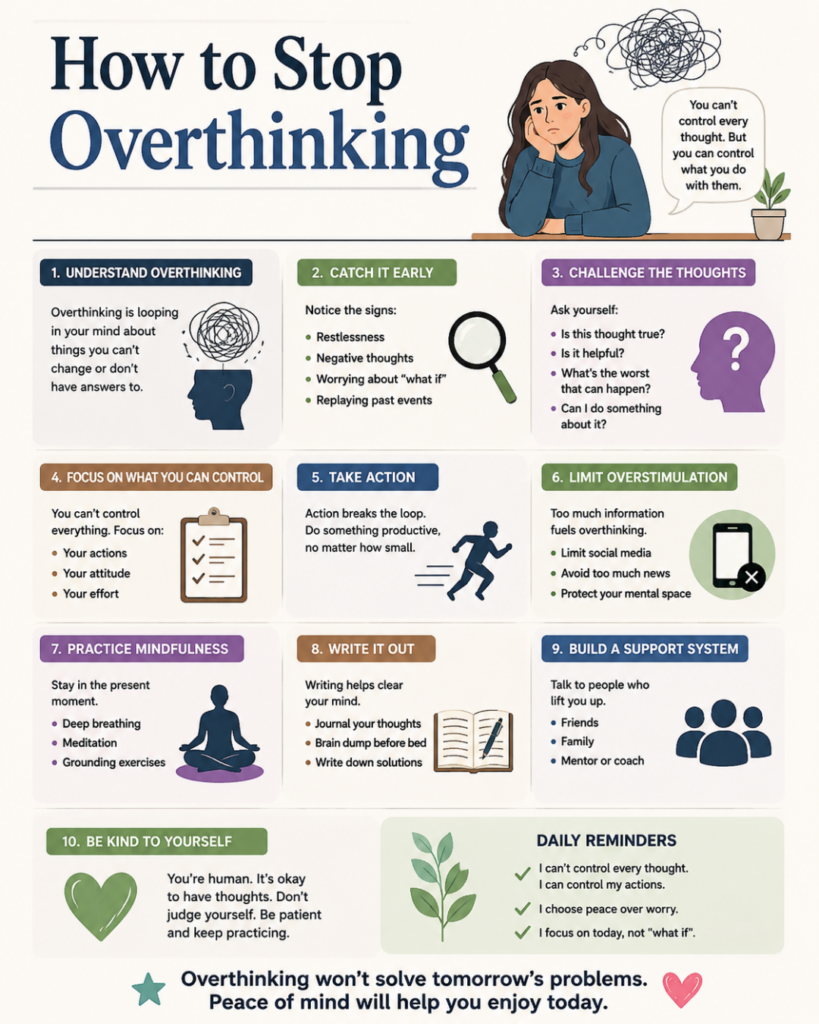
1. Become Aware of Your Thoughts
Pay attention to your thinking patterns. Notice when negative or repetitive thoughts appear and identify what triggers them.
2. Write Down Your Thoughts
Keeping a journal can help organize your thoughts and emotions. Writing down worries often reduces mental pressure and provides clarity.
3. Focus on Solutions
Instead of repeatedly thinking about a problem, focus on possible solutions. Ask yourself, “What action can I take right now?” This approach helps shift attention from worry to progress.
4. Break Tasks into Smaller Steps
Large tasks can feel overwhelming and create anxiety. Divide your goals into smaller, manageable steps to reduce stress and increase confidence.
5. Stay Productively Busy
Engage in activities that keep your mind occupied, such as reading, exercising, learning a new skill, or spending time with loved ones. Staying active can prevent unnecessary thoughts from taking over.
6. Accept Failure as Part of Life
Failure is a natural part of growth and learning. Instead of dwelling on mistakes, view them as opportunities to improve and move forward.
7. Practice Mindfulness
Mindfulness helps bring attention to the present moment. Deep breathing, meditation, or simply focusing on your surroundings can reduce mental clutter and calm the mind.
8. Limit Negative Thinking
Challenge negative thoughts by asking yourself whether they are based on facts or assumptions. Replace negative self-talk with more balanced and realistic perspectives.

9. Let Life Unfold Naturally
Not everything can be controlled. Learning to accept uncertainty and allowing life to progress naturally can significantly reduce overthinking.
Final Thoughts
Overthinking can drain your energy, increase stress, and negatively impact your mental health. However, by becoming aware of your thoughts, focusing on solutions, staying active, and practicing self-compassion, you can gradually break free from the cycle of excessive thinking.
Remember, not every thought deserves your attention. Give yourself permission to live in the present, trust your abilities, and embrace life’s uncertainties. A calmer mind leads to a healthier, happier, and more fulfilling life.

 Arabic
 French
 Spanish
 Portuguese
 Deutsch
 Turkish
 Dutch
Dutch
 Italiano
 Russian
 Romaian
 Portuguese (Brazil)
 Greek
Greek