


For many students and parents, the cost of driving lessons is a significant financial consideration. It’s tempting to choose the school with the lowest advertised hourly rate, but this often leads to a false economy. A "Top Drive Driving School" operates on the principle that value outweighs cheapness. The true cost of driver education is not simply the price tag of a package, but the total investment required to produce a safe, licensed, and test-ready driver. Calculating this true cost involves looking at the efficiency of the instruction, the inclusion of essential services, and the cost of potential failure.
Understanding the components of the total investment helps justify the choice of a premier school over a budget alternative.
Component 1: The Hourly Efficiency and Pass Rate Correlation
The core value proposition of a "Top Drive" school is the efficiency of its instruction, which directly correlates to a lower total cost.
- Fewer Required Hours: Because the instructors are experts (see Article 8) and the curriculum is structured and personalized (see Article 14), students learn faster and retain more. A low-quality school might require 25 hours of lessons for a student to achieve test readiness, whereas a premier school might achieve the same result in 15-20 highly efficient hours. The lower hourly rate of the budget school is quickly negated when more hours are needed.
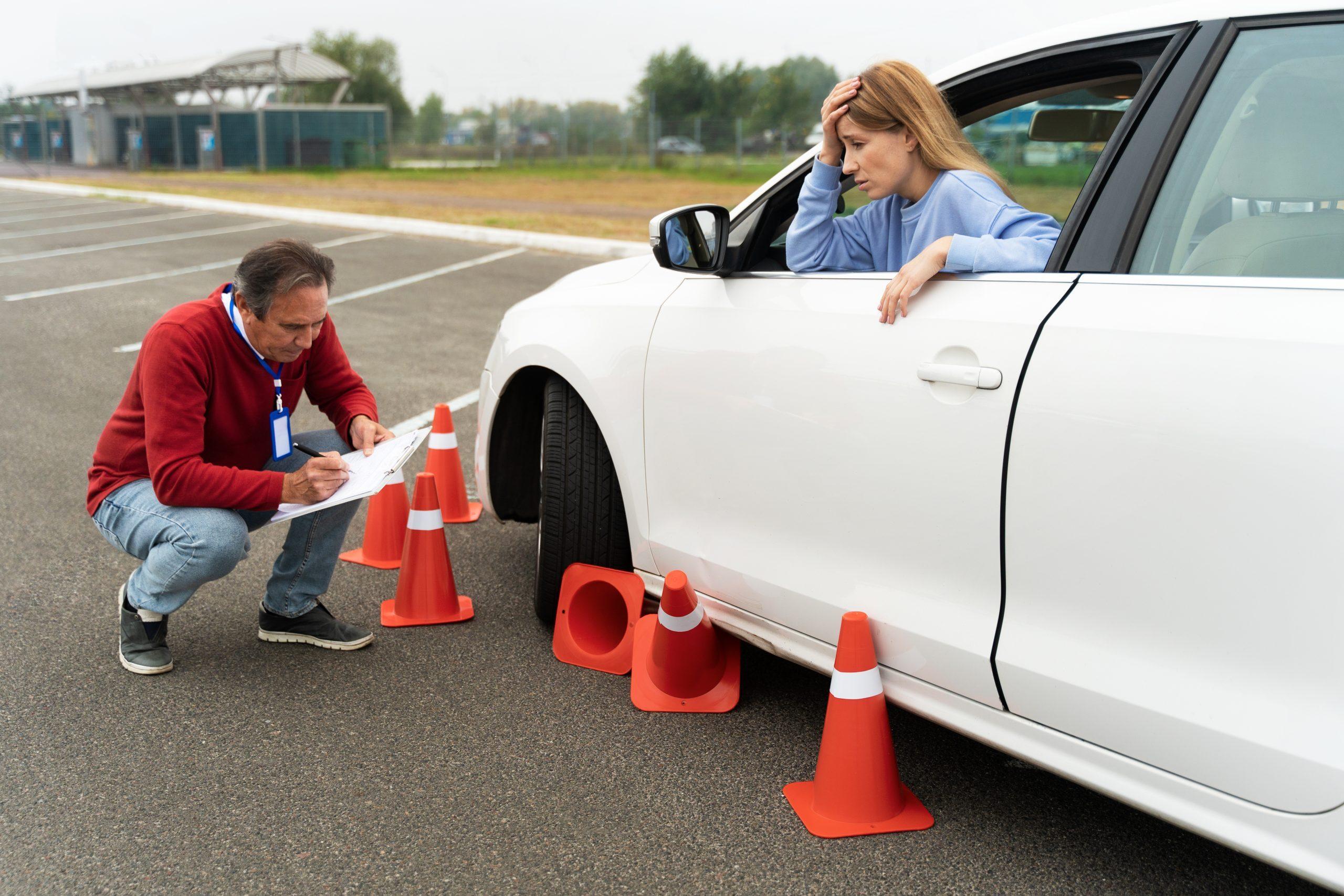
- The Cost of Failure: The most expensive lesson is the failed DMV test. A failure incurs the cost of rebooking the test (the DMV fee), the rental fee for the vehicle for the second test (often a $150-$250 charge), and the cost of at least one or two additional refresher lessons before the retest. A high first-time pass rate, achieved through quality instruction, is the most powerful cost-saving measure available.
Component 2: Included Value-Added Services
Many "cheap" schools advertise a low hourly rate but exclude necessary services, which the student must then purchase separately. A "Top Drive Driving School" bundles essential value that simplifies the overall process and budget.
- Free Pick-Up and Drop-Off: As detailed in Article 13, this saves the student and parent time and gasoline costs associated with driving to a central office.
- Road Test Packages: The inclusion of a comprehensive road test package (which bundles a pre-test refresher session, use of the school’s vehicle, and administrative support at the DMV) is often mandatory for peace of mind. When calculated separately, the cost of this service alone can make a budget school's overall price comparable to a premier one.
- Insurance and Safety: The tuition covers the cost of training in a modern, dual-controlled vehicle that is fully insured to commercial standards (Article 3). This peace of mind—that the student and vehicle are financially protected—is an invaluable component of the true cost.
Component 3: Long-Term Financial Impact (Insurance Discounts)
The financial benefits of a "Top Drive" education extend long after the license is obtained, often through lower insurance premiums.
- Accident Reduction: The greatest long-term financial saving comes from accident avoidance. The defensive driving mastery taught at a premier school (Article 9) reduces the likelihood of future collisions, saving the student from deductibles, rising premiums, and potential lawsuits.
- Defensive Driving Certification: Many premier schools offer specialized defensive driving courses or certificates that, when presented to an insurance company, can qualify the student (especially teens) for a substantial discount on their auto insurance policy. The savings from this discount alone can often offset a significant portion of the initial tuition fee.
By evaluating the total cost—including efficiency, value-added services, and long-term financial benefits—a "Top Drive Driving School," despite a potentially higher advertised hourly rate, often proves to be the most economically sound and safest choice in the long run.

 English
 Arabic
 French
 Spanish
 Portuguese
 Deutsch
 Turkish
 Dutch
Dutch
 Italiano
 Romaian
 Portuguese (Brazil)
 Greek
Greek