


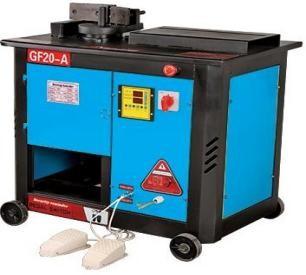
The construction industry relies heavily on reinforced concrete structures for buildings, bridges, highways, and large infrastructure projects. At the core of these structures are steel reinforcement bars, commonly known as rebar, which provide strength and durability to concrete. To shape these steel bars accurately according to engineering designs, contractors depend on advanced machinery. One of the most essential solutions used in construction today is rebar bending equipment, designed to bend steel bars quickly, precisely, and efficiently.
Rebar bending plays a crucial role in structural engineering. Reinforcing bars often need to be bent into specific angles or shapes to fit the structural framework of columns, beams, slabs, and foundations. Performing this task manually is not only time-consuming but also physically demanding for workers. Modern machines have transformed this process by automating steel bar bending, ensuring consistency and precision across every piece of reinforcement used in construction projects. Rebar bending machines are widely used in construction sites and steel processing plants because they can efficiently bend reinforcement bars to the required angles with high accuracy.
Modern construction companies are increasingly adopting automated bending machines because they significantly boost productivity. These machines can process a large number of steel bars in a short amount of time, helping contractors meet strict project deadlines. High-speed bending capability, programmable angles, and reliable mechanical systems allow operators to produce uniform steel bars for reinforced concrete structures. With improved accuracy and efficiency, builders can reduce costly mistakes and maintain structural reliability in their projects.
Another major advantage of using advanced bending machinery is its versatility. Different construction projects require different steel bar diameters and bending angles. Modern machines can handle various bar sizes and bend them into multiple shapes, making them suitable for a wide range of construction applications. From bridge reinforcement cages to building columns and foundation frameworks, this equipment ensures that each steel bar is shaped precisely according to engineering requirements. Many machines are designed with compact structures and simple operation systems that make them easy to use on construction sites or in steel fabrication workshops.
Safety and cost efficiency are also important benefits of automated steel bending systems. Manual bending often involves heavy labor and repetitive tasks, which can lead to worker fatigue and safety risks. Automated equipment reduces the need for intensive manual effort while ensuring consistent results. Operators can program bending angles and monitor the process through control systems, allowing them to focus on supervision and quality control rather than manual labor.
High-performance machines also help reduce material waste. Precision bending ensures that steel bars are processed accurately according to project specifications, minimizing errors that could lead to discarded materials. For large infrastructure projects where thousands of steel bars are required, this efficiency can significantly lower operational costs.
Additionally, modern bending equipment is designed with durability and long-term reliability in mind. Strong frames, high-quality motors, and advanced mechanical systems ensure stable performance even during continuous industrial use. This makes such machines a valuable investment for construction companies and steel processing factories that require dependable equipment for daily operations.
In an industry where speed, precision, and structural safety are critical, adopting modern machinery is essential. Investing in reliable rebar bending equipment allows contractors to improve productivity, maintain engineering accuracy, and deliver high-quality infrastructure projects. With the right equipment in place, construction professionals can streamline operations and meet the growing demands of modern building and infrastructure development.

 Arabic
 French
 Spanish
 Portuguese
 Deutsch
 Turkish
 Dutch
Dutch
 Italiano
 Russian
 Romaian
 Portuguese (Brazil)
 Greek
Greek